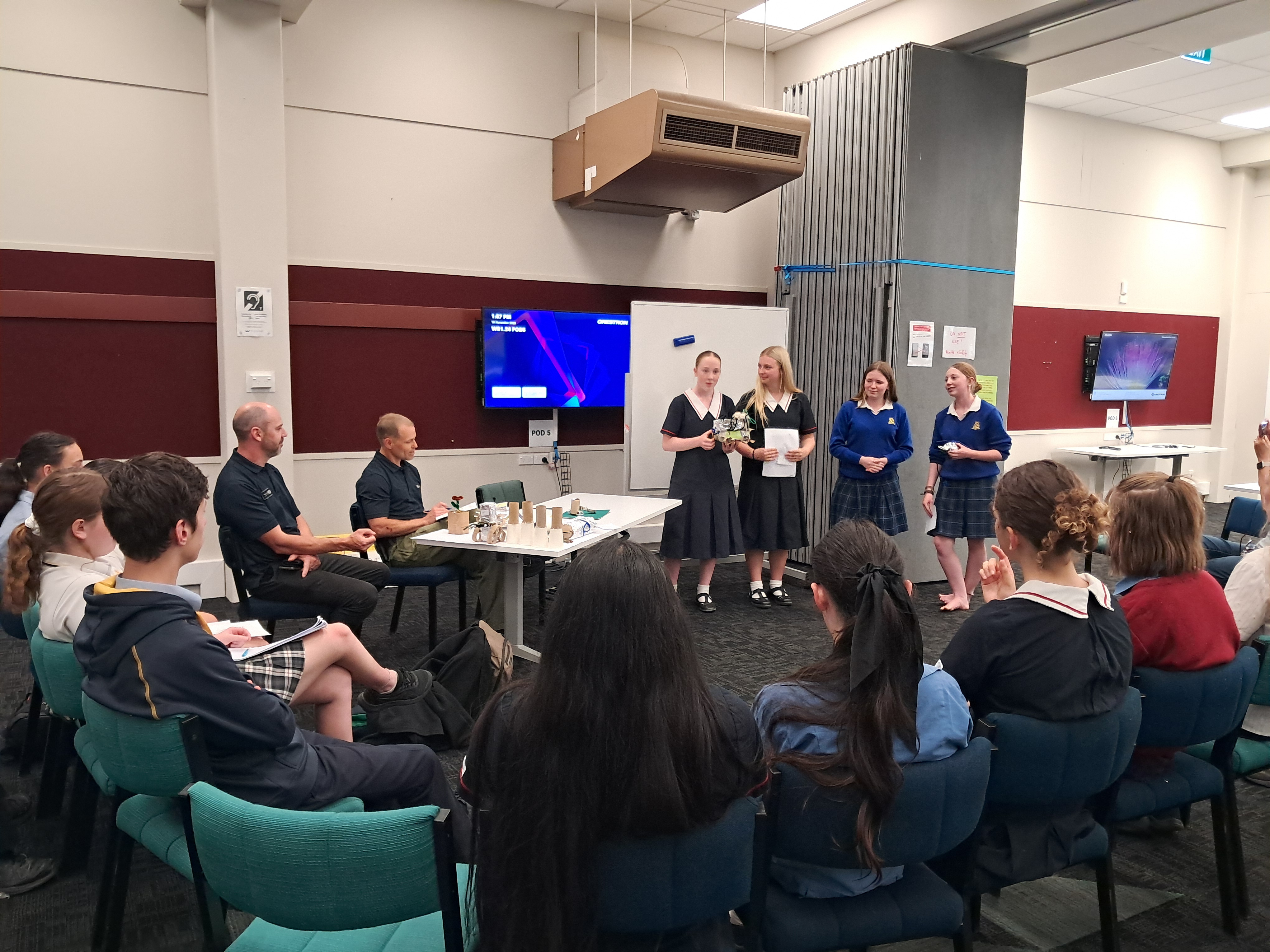
Teens on a mission to show enterprise
Eighty Year 10 students from eight secondary schools came to Massey University last week on a mission to solve a science challenge in a day
The students came from secondary schools spanning Horowhenua to Wanganui to attend the MPI Mission Sustainable Innovation Challenge at Massey University last Tuesday (18 November), filling a Wool Building lecture theatre.
The challenge involved solving a specific food and fibre sector problem by developing an innovative new product to address it, describing the market for the product, and how it will be of value to customers, growers or processors. The four challenges all involved agriculture, food or forestry production.
The teens were split into small teams to come up with a solution to make sheep and beef weighing and drenching more efficient; find an innovative product for crossbred wool; think of ways to use vegetable crop waste in a product; or reduce ‘slash’ waste by figuring out how to make use of forestry residue.
It was a conceptual challenge, with some swift paper prototyping and web presentations being assembled during the morning. The students had to work out how to make their product using technology enablers, and clearly identify the value to prospective customers. The day closed with teams presenting their product ideas to the group.
Riddet Institute Senior Food Technologist Agnes Hutchings of Massey University was one of the day’s expert mentors, working with about 17 of the students who had been split into small teams.
“We are doing product development and brainstorming how we can turn the waste left from vegetable growers or processors into added value products that consumers can buy,” she said.
“I’m helping with the ideas and process, how to make it and how to market it, and how to utilise innovations in technology with the idea process.”
The day was sponsored by the Ministry for Primary Industries and delivered by the Young Enterprise Trust.
The Young Enterprise Trust’s Paul Newsom said the goal of the Trust was to help young people discover their potential, and the Mission Sustainable Innovation Challenge was about getting students involved in enterprise.
The Trust holds the days every year in different locations around the country. It had been about seven years since Palmerston North had its turn.
“The food and fibre sector in New Zealand has significant need,” Mr Newsom said. “It needs marketers, lawyers, accountants, as well as scientists and technologists.”
He said the Year 10 age group is when students are starting to make decisions about future subjects and where they want to head.
“This programme is about connecting the needs of industry to what the students are learning at schools and making it relevant.
“If you are going to solve real-world problems, then you need entrepreneurial skills, and mindsets, and the capability to be innovative.”
Read more here.